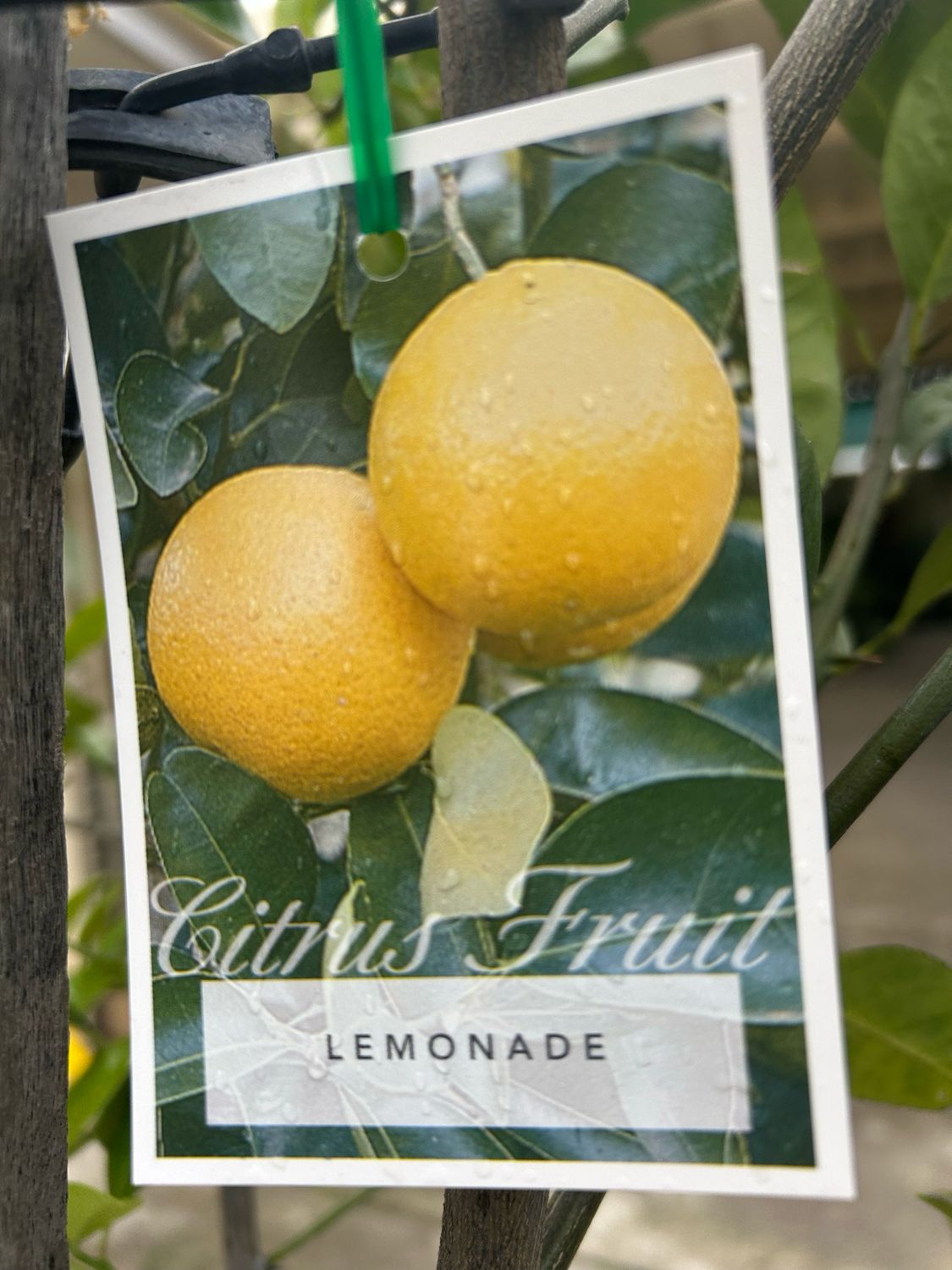
Lemonade 45 L
AU$399.00
Price incl. GST (10%) AU$36.27
Estimated delivery time
Pickup: in 2 days
In stock: 1 available
Product Details
Lemonade
Common Names
Lemonade, Lemonade Fruit Tree, Lemonade Citrus Tree, Dwarf Lemonade
Description
Lemonade is a compact, evergreen citrus tree that produces juicy, fragrant fruit with a mild, sweetly tangy flavour. The fruit is less acidic than a traditional lemon and is excellent for fresh eating, drinks, desserts, cooking, marinades and preserves.
Its manageable size makes it well suited to small gardens, courtyards, patios and growing in large pots. With glossy green foliage, fragrant white flowers and attractive yellow fruit, Lemonade is both productive and ornamental.
Main Features
● 🌱 Compact, evergreen citrus tree
● 📏 Usually grows around 1.5–2.5 m, depending on conditions and pruning
● 🍋 Produces juicy, fragrant fruit with a mild, sweet flavour
● 🌿 Glossy evergreen foliage
● 🌸 Fragrant white flowers
● ☀️ Best grown in full sun
● 🪴 Suitable for pots and small gardens
● 🍹 Ideal for fresh eating, drinks, desserts, cooking and preserves
● 🌳 Excellent for edible landscaping
How to Plant
Choose a sunny position receiving at least 6 hours of direct sunlight per day.
Prepare the soil by incorporating compost or well-rotted organic matter into the planting area. Ensure the soil is well drained, as citrus trees do not perform well in waterlogged conditions.
Dig a hole approximately twice as wide as the root ball. Place the tree at the same depth it was growing in its pot, backfill with soil and water thoroughly.
Apply mulch around the base of the tree to help retain soil moisture, keeping it clear of the trunk.
Watering
Lemonade trees need regular watering, especially while establishing and during Perth’s hot, dry summers.
● Newly planted trees: Water deeply several times per week as required.
● Established trees: Deep water around 1–2 times per week during hot weather, depending on soil type and rainfall.
● Reduce watering during cooler and wetter periods.
● Container-grown trees may require more frequent watering because pots dry out quickly.
Allow the soil to drain between watering and avoid keeping the roots constantly wet.
Fertiliser
Regular feeding supports healthy foliage, flowering and fruit production.
Use a quality citrus fertiliser containing nitrogen and essential nutrients.
Recommended fertilising times in Perth
🌱 Early spring: Main feeding to encourage new growth.
🌿 Late spring: Feed again to support flowering and fruit development.
☀️ Summer: Apply a light additional feed if required to maintain growth and fruit production.
Always follow the fertiliser label instructions. Over-fertilising can damage the roots and lead to excessive leafy growth.
For young trees, use smaller amounts and keep fertiliser away from the trunk. Water thoroughly after applying granular fertiliser.
Controlled-release citrus fertiliser is a convenient option for container-grown trees.
Pruning
Light pruning can be carried out to maintain the tree’s compact shape and remove dead, damaged or crossing branches.
Remove any growth appearing below the graft union, as this may come from the rootstock rather than the desired Lemonade variety.
Avoid heavy pruning, as excessive removal of branches can reduce flowering and fruit production.
Growing in Pots
Lemonade is well suited to container growing.
Choose a large pot with excellent drainage and fill it with a premium-quality citrus or fruit-tree potting mix.
Place the pot in a sunny position and monitor moisture levels carefully during summer. Feed regularly with a citrus fertiliser suitable for container-grown plants.
Repot or refresh the potting mix when the tree becomes root-bound or growth slows.
Pests & Problems
Common citrus pests may include scale, aphids, citrus leaf miner, mites and bronze orange bugs. Inspect new growth and the undersides of leaves regularly.
Yellowing leaves may be caused by nutrient deficiencies, poor drainage or inconsistent watering. Good soil preparation, adequate drainage and regular citrus feeding will help maintain healthy growth.
Harvesting
Lemonade fruit can ripen at different times throughout the year, depending on growing conditions and seasonal flowering.
Fruit is ready to harvest when it has developed a rich yellow colour and feels firm but slightly yielding. Cut or gently twist the fruit from the tree to avoid damaging the branches. The fruit can also be harvested earlier when greenish-yellow if a sharper flavour is preferred.
Landscaping Importance
Lemonade combines ornamental appeal with versatile edible fruit, making it an excellent choice for Perth gardens.
Its evergreen foliage provides year-round greenery, while fragrant flowers and bright yellow fruit add seasonal interest. Its compact form is ideal for backyards, courtyards, patios, raised garden beds and large containers.
Save this product for later
Customer reviews
Reviews only from verified customers
No reviews yet. You can buy this product and be the first to leave a review.
Lemonade 45 L
Display prices in:AUD